
XR AI Spotlight
XR AI Spotlight gives the stage to funders and makers pushing the boundaries of XR and AI. You will learn what happens when technology and creativity collide, how AI apps and XR tools are built and brought to market, the personal stories and workflows of leaders and creatives pushing the boundaries of what these 2 technologies can offer and the opportunities they unlock.

 Spotify
 YouTube
 Apple Podcasts
XR AI Spotlight
XR AI Spotlight gives the stage to innovators, technologists and creatives at the intersection between XR and AI. You will learn what happens when technology and creativity collide, how AI apps and XR tools are built and brought to market, the personal stories and workflows of leaders and creatives ...
Recent Episodes
Oct. 21, 2026
Enterprise XR in 2026: What’s Working
Horacio Torrendell, founder and CEO of enterprise XR studio Treeview, joins today to examine where spatial computing stands after a decade of changing hardware, platforms, and expectations. Horacio explains which enterprise applications are gaining traction, how Treeview survived the industry’s ups and (many) downs, his experience with Gaussian Splatting workflows for Quest, and the future of “”Immersive” after HoloLens, Apple Vision Pro’s enterprise position, and why Treeview is doubling down o
Oct. 7, 2026
The Missing Layer for Physical AI
Shadnam Khan, co-founder and CEO of Multiset AI, explains how visual positioning gives physical spaces a coordinate system that phones, headsets, drones, and robots can understand.Shad breaks down: the real trade-off between each capture format and why most maps fail on the capture plan rather than the scanner, why a better-looking map does not localize better, how one walk produces both a splat a human reads and a map a machine localizes against, and where visual positioning genuinely does not
Sept. 23, 2026
The Reality of Building for Vision Pro
Tomas Cupal, creator of Blockworks, joins us to unpack what it takes to move a VR project from Meta Quest to Apple Vision Pro. Tomas explains how Blockworks evolved into a mixed reality sandbox, the technical reality of building in Unity for visionOS, including Apple’s RealityKit rendering pipeline and the limitations developers must work around. Tomas also shares candid lessons on launching into Vision Pro’s small gaming market, finding visibility through creators, and why he has decided to mov
Sept. 16, 2026
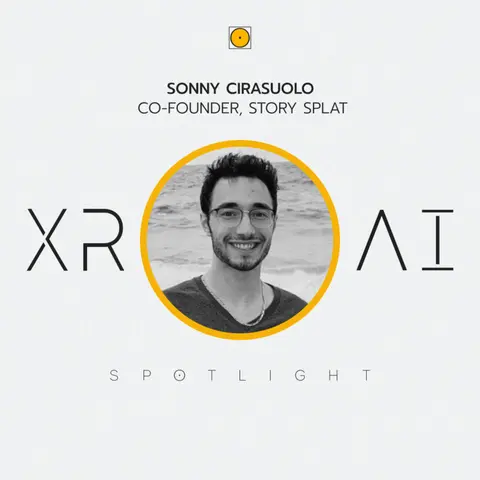
Make Free Gaussian Splat Tours for Real Estate
Sonny Cirasuolo, co-founder of Story Splat, explains how Gaussian Splatting can become more than a beautiful 3D capture. Story Splat turns splats into interactive, web-based experiences and is being used by Hyatt Regency Tamaya to create a navigable resort experience and help sales teams visualize event spaces without physically rebuilding them. He also explores emerging applications in journalism, cultural preservation, education, real estate and hospitality, plus the remaining barriers around
Aug. 26, 2026
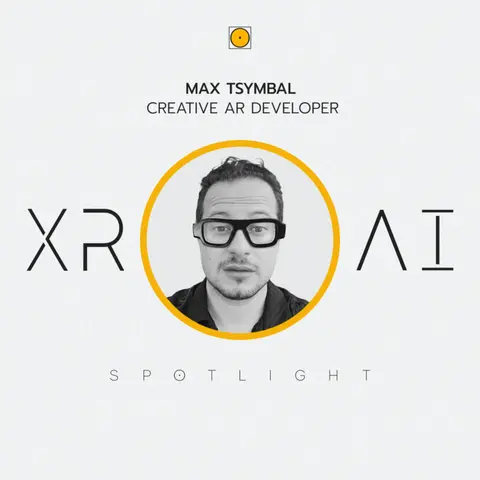
I Asked AI to Build a Lens for SPECS
Join CLAD Summer Hackathon: https://lenslist.co/clad-summer-hackathon What is CLAD: https://www.youtube.com/watch?v=FP96O-wRtV4 What happens when an experienced AR developer asks an AI coding agent to build a practical Spectacles Lens, without writing a single line of code? Today we talk with Max Tsymbal, winner of week one of Snap’s CLAD Hackathon, about Packspace, a spatial packing assistant that helps users organise what to bring on a trip through Spectacles. Max explains how he used CLAD f
Aug. 19, 2026
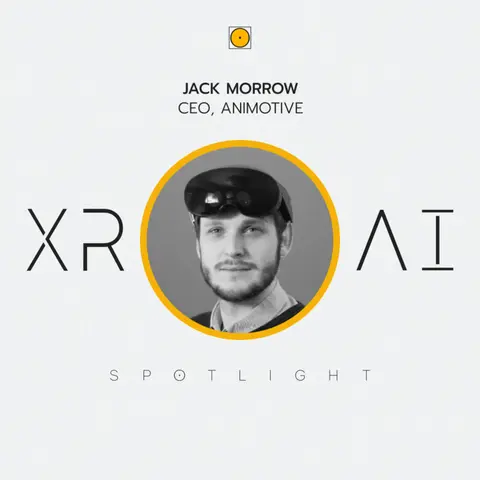
AI Mocap Without a Suit: How It Works
In this episode, Jack Morrow, CEO of Animotive, explores how their immersive platform revolutionizes content creation in XR and AI. Discover how Animotive's real-time collaboration, AI-driven motion capture, and virtual staging are transforming industries from entertainment to education. Subscribe to XR AI Spotlight weekly newsletter 👉 https://xraispotlight.substack.com/ *** CONNECT WITH OUR GUEST 💼 Linkedin 🔗 Website *** CONNECT WITH ME 🐤X (Twitter) 💼 Li